

About Ana Juma
As an introvert and a deep feeler, putting my thoughts on paper became the simplest way to move through life’s whirlwinds with more calm and clarity. Today, I support wellness seekers in starting and deepening a journaling practice that feels approachable, meaningful, and sustainable.
Journaling for Beginners
New to journaling and not sure where to start? This playlist is designed for beginners who want a clear, grounded introduction to journaling.
Journaling Explained
What is journaling, really, and why does it work? This playlist gives you a deeper understanding of how journaling supports personal growth and why it is such a powerful tool for self-discovery.
Journaling Ideas
Not sure what to write about? This playlist is filled with practical journaling ideas to help you stay inspired and engaged even on days when your mind feels blank.
The Journaling System That Keeps My Mind Clear All Week
A clear mind doesn’t come from journaling more — it comes from journaling with intention. Instead of putting everything into one notebook, this system uses a few distinct journals, each with a specific role.
The result is less mental clutter, clearer processing, and a practice that actually supports daily life rather than adding another task to it.
Do You Need Multiple Journals?
Short answer: no.
If you’re new to journaling, simpler is almost always better. One journal is more than enough to build consistency.
This system works because it’s built on experience and flexibility. I use some journals daily, others only occasionally. Each one has a clear purpose, which prevents overwhelm and decision fatigue.
Think of this system as inspiration, not a strict checklist.
The Daily Journal
The daily journal is the foundation of the system. I use the Life Journal by Prophsee for everyday processing of thoughts, emotions, tasks, and check-ins.
The trick to making it work is finding the sweet spot between structure and freedom:
- A quick self-assessment to see where different areas of life stand
- Space to set short-term focus areas and habits
- Daily prompts for gratitude, tasks, emotional check-ins, and reflections
- A blank page for stream-of-consciousness writing or dreams
The Weekly Journal
The weekly journal is where deeper reflection happens. It’s used to ponder on experiences, emotions, and patterns that don’t always surface in daily writing.
This is the space for journaling techniques like:
- Stream of consciousness
- Dialogues
- Clustering
- Unsent letters
- Inner wisdom exercises
For me, each journal represents a chapter of life and often begins with a clear theme and a vision board.
I write at a regular weekly rhythm, usually the same day each week, creating a consistent space and time for reflection.
In this blank-page journal, I often include photos, receipts, pressed flowers, and small keepsakes. Visual touches bring context and meaning that words alone sometimes can’t capture!
The Yearly Journal
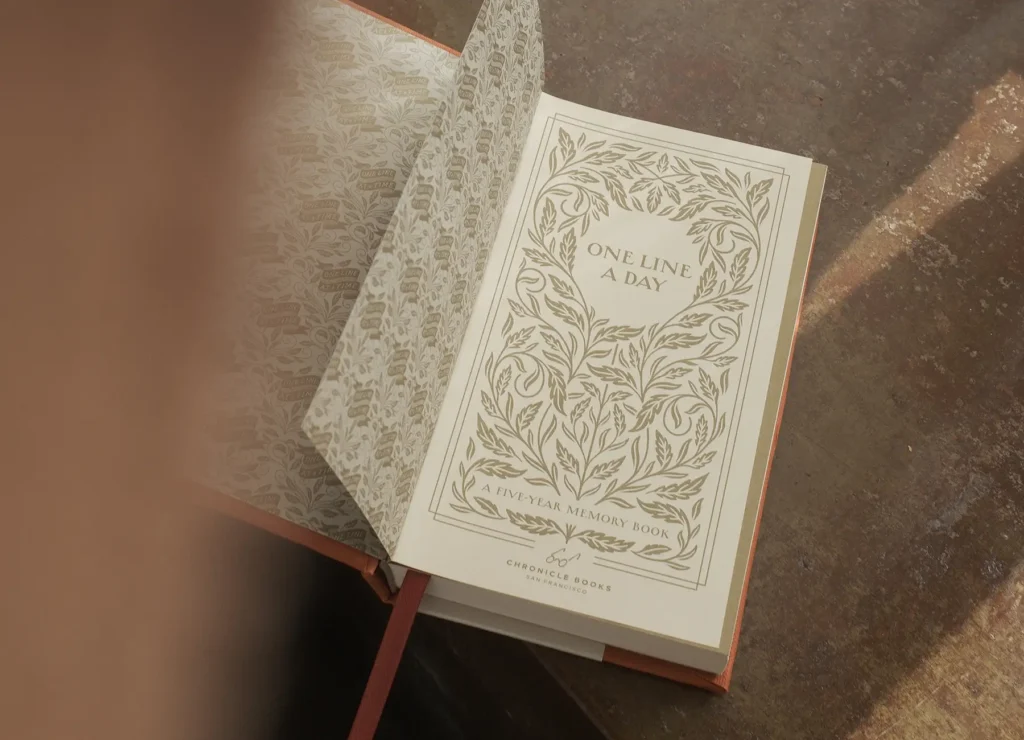
The yearly journal is used as a bridge between one year and the next. It’s a dedicated space for reflection, review, and intention-setting. I use the New Year Journal.
It also doesn’t have to align with the calendar year, either. Some people prefer using birthdays or personal milestones instead.
What matters is having one clear place where insights and intentions for the year live.
The Manifestation Journal
This journal holds longer-term visions, usually spanning several years. It’s used sparingly and revisited only when needed. You can also use digital tools if that feels more accessible.
The purpose stays the same: holding big-picture direction without forcing daily engagement.
For more details on how to create a Manifestation Journal, watch this YouTube video.
The Therapy Journal
The therapy journal provides structure when deeper support is needed. I use this one by Therapy Notebooks.
It includes space for:
- Reflections during the week
- Session preparation
- Key takeaways
- Post-session integration
One important reminder here: journals don’t need to be finished.
Pausing, returning, or switching journals is normal. Flexibility is part of a healthy journaling practice!
The Dream Journal
Reflections on my dreams often end up scattered across multiple notebooks. A dedicated dream journal helped me create some order, even though it’s currently just a simple dotted page journal.
Work-Related Journals
I keep three journals that support my work and creative output:
Brainstorm journal: A chaotic, unstructured space for ideas, notes, and rough thinking. Nothing needs to be tidy here.
Teaching journal: Used to reflect on workshops, patterns noticed in students, and lessons learned through teaching. Writing here sharpens awareness and intention.
Waste book (digital): A temporary holding space for unfiltered thoughts, observations, and ideas. This is where raw material lives before being refined, moved, or developed further.
Let the System Emerge on its own
This journaling system isn’t set in stone. It changes as life changes.
The purpose of journaling isn’t to fit yourself into a structure – it’s to let the structure adapt to you. The way you journal at different stages of life will naturally shift, and that’s the natural way of journaling.
As long as you’re writing, you’re doing it right.